Robotic Phlebotomy * AI Guided Vein Access

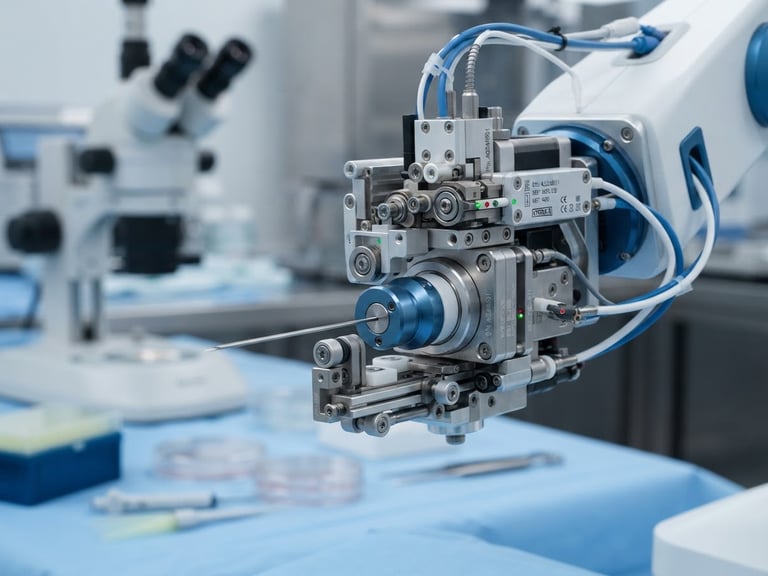
Sub-millimeter accuracy for clinical laboratories
The VenaBot platform integrates real-time near-infrared vein mapping with autonomous needle guidance to secure first-stick success on difficult venous access patients.
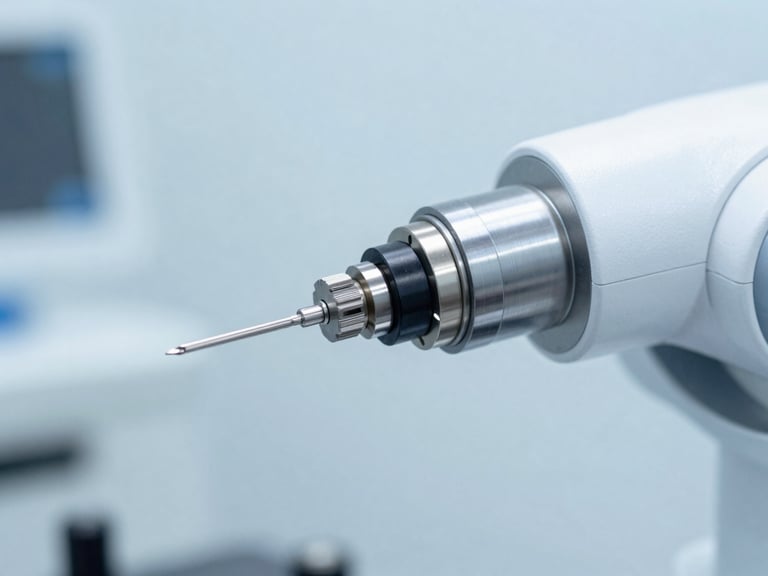
Engineered for absolute clinical safety
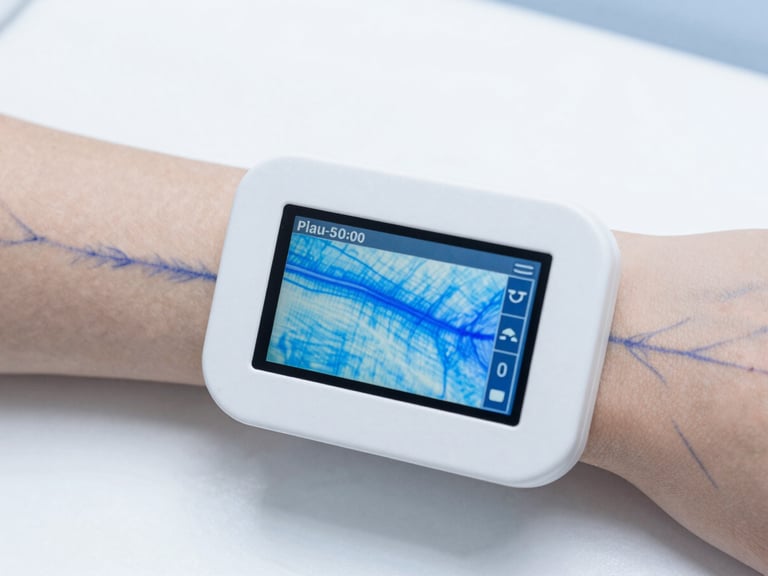
Real-time near-infrared tracking
The system maps sub-surface venous structure in under three seconds, calculating the optimal insertion path and depth before any mechanical movement begins.
Sub-millimeter insertion control
Autonomous needle-guide actuators control depth and angle within fractions of a millimeter, mitigating the risk of infiltration and eliminating multiple stick attempts.
Multi-layered safety architecture
Every autonomous venipuncture sequence is governed by real-time sensor feedback and mechanical overrides designed to protect the patient at every millisecond.
Instant-retract safety
Continuous monitoring
Clinician override
Active force sensors detect muscle resistance changes and immediately retract the needle guide in under 50 milliseconds.
Optical tracking monitors patient movement, pausing the robotic arm instantly if any displacement exceeds sub-millimeter tolerances.
A physical pause control and software override keep the operating clinician in absolute control of the procedure at all times.
Review the technical specifications
Access the complete engineering schema, safety certifications, and clinical validation studies.
© 2026 ROPHAI
Forward-Looking Statements: This page contains forward-looking statements regarding our Series A fundraising objectives, planned clinical trials, and regulatory strategies. These statements are based on current expectations and involve inherent risks, delays, and uncertainties regarding medical device development.
Headquarters: Cambridge, MA
info@rophai.com